Last updated September 25, 2026
We get asked this on almost every patio walkthrough in Phoenix: should I pour stamped concrete or lay pavers? Both can look great on day one. The difference shows up a few summers later, once monsoon storms, caliche soil movement and full sun have gone to work. Here is how the two compare on the things that actually matter in an Arizona yard, from a crew that has installed both since 2012.
Stamped concrete vs pavers: how do they compare in the desert?
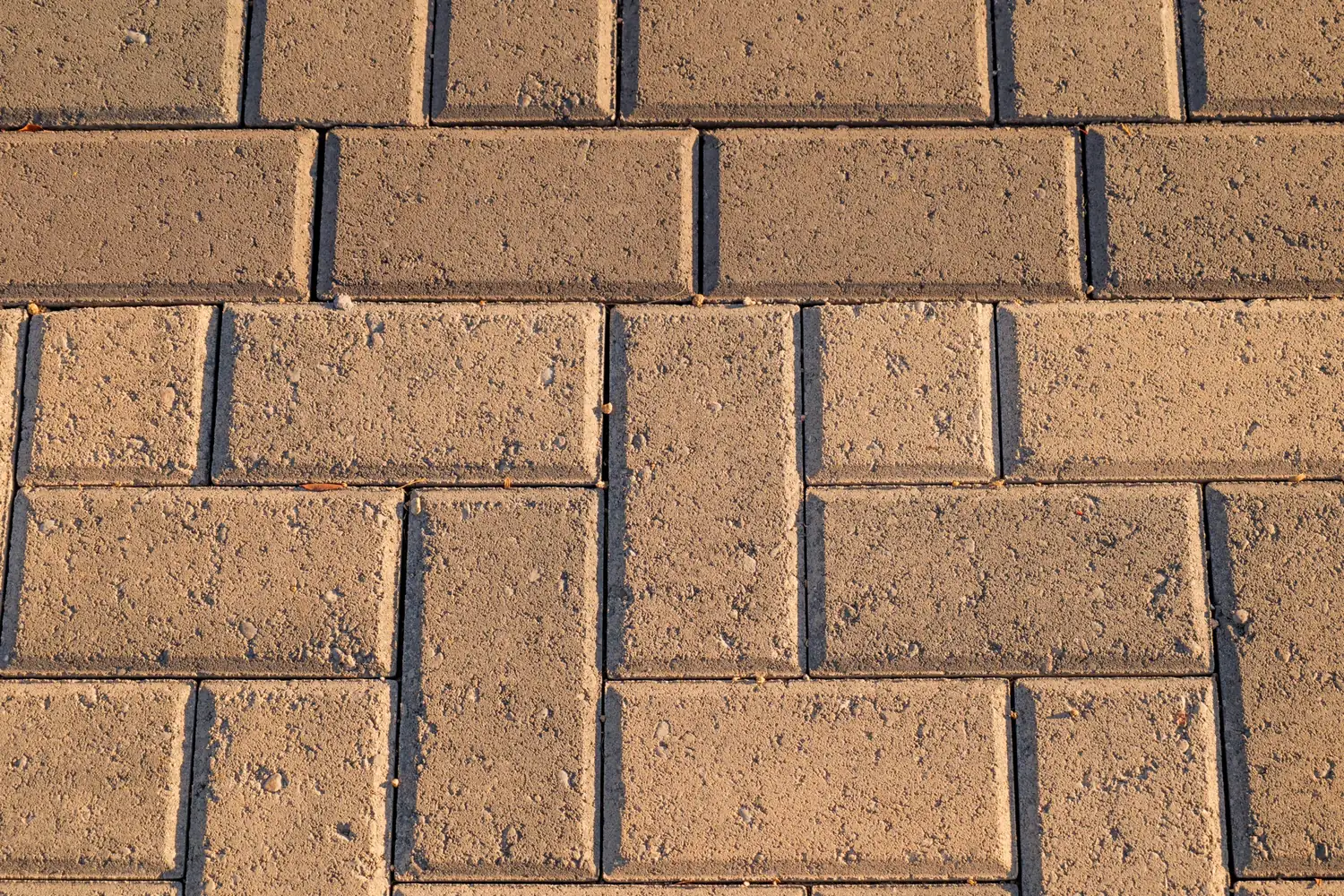
Both surfaces start as a patterned patio, but they behave differently once Arizona weather sets in. Stamped concrete is one poured slab textured to mimic stone or slate. Pavers are individual units set over a compacted base with sand joints. That single difference, one rigid slab versus many small pieces, drives almost everything below: how they crack, how they repair, and how they hold up through monsoon season and years of full sun. Here is the honest side by side we walk homeowners through before we quote either one.
| Factor | Stamped concrete | Pavers |
|---|---|---|
| Cracking in caliche soil | More likely; one slab moves as a unit | Resists cracking; joints flex with soil |
| Repairs | Patches and color rarely match | Lift and swap single stones invisibly |
| Heat underfoot | Depends on color; dark stamping runs warmer | Depends on color; light tones stay cooler |
| Upfront cost | Generally lower | Generally higher |
| Desert look | Seamless; can mimic flagstone or slate | Defined stone pattern; widest color range |
| Serviceability | Cracks show with age; hard to spot-fix | Long life; individual units are serviceable |
Which cracks less in Arizona's caliche soil?
Pavers crack less, and it comes down to how our soil moves. Phoenix sits on caliche, a hard, shifting layer that expands and settles with moisture and heat. A stamped concrete slab is rigid, so when the ground moves under it, the slab can crack straight across, and control joints do not always hide it. Pavers are laid as separate units over a flexible base, so small ground movement is absorbed at the joints instead of splitting the surface. Add monsoon downpours and triple-digit summers, and that flexibility is a real advantage over the life of the patio.
Which is easier to repair after monsoon or settling?
Pavers win on repairs, and this is where homeowners feel the difference years later. If a paver stains, chips or settles, our crew lifts the affected stones, resets or swaps them, and re-sands the joints. Done right, the fix disappears because the replacements come from the same product line. Stamped concrete is tougher to correct. A crack or chip has to be patched, and matching the original color and stamp pattern is very hard once the slab has weathered in the sun. Patches usually stay visible. If a section fails badly, you are often looking at re-pouring a whole area rather than a spot fix.
Which stays cooler underfoot and suits a desert look?
On heat, color matters more than which surface you choose. A light-toned paver and a light stamped finish both stay cooler underfoot than a dark version of either, because lighter surfaces reflect more of the Phoenix sun. So neither is automatically cooler; the tone you pick drives it. On looks, stamped concrete gives a seamless field that can imitate flagstone or slate, which some desert-modern and Santa Fe styles love. Pavers give crisp, defined stone patterns and the widest range of colors and shapes, which pairs naturally with xeriscape, decomposed granite and desert planting. Both can look right; it depends on the style you are after.
What do stamped concrete and pavers cost in Phoenix?
Stamped concrete is usually the lower upfront cost, and pavers usually cost more installed. What we generally see in the Phoenix area is stamped concrete in the range of 12 to 20 dollars per square foot, and pavers in the range of 18 to 30 dollars per square foot, installed. Both ranges move with the base prep, drainage, access, pattern, material grade and site conditions, so treat these as planning numbers only. Your real price depends on an on-site estimate where we measure the space, check the soil and grade, and price the exact materials you want. When you factor in easier repairs and longer service life, many homeowners find pavers the better value over time.
| Surface | Typical installed range (per sq ft) | Main cost driver |
|---|---|---|
| Stamped concrete | 12 to 20 dollars | Slab prep, color and stamp pattern |
| Pavers | 18 to 30 dollars | Base prep, material grade, pattern |