Last updated September 25, 2026
We have designed and built desert yards across Phoenix, Scottsdale and Gilbert since 2012, and xeriscaping is where good planning pays off fastest. Done right, a xeriscape looks intentional, survives full sun and monsoon, and slashes your water bill. Done wrong, it is a gravel parking lot. Below are the principles and specific ideas we use, plus an honest note on city rebates, so your yard works for the desert instead of against it.
What are the core principles of xeriscaping in Arizona?
Xeriscape is not zero plants, it is smart water. Seven principles guide every desert yard we build: start with a plan and clear zones, improve the soil, choose low-water and native plants, limit turf to where you actually use it, group plants by water need, irrigate efficiently with drip on a timer, and mulch with gravel or decomposed granite to hold moisture. In Phoenix that also means designing for full sun, caliche soil that drains slowly, and monsoon downpours that need somewhere to go. Get the plan right and maintenance drops, plants live longer, and the yard reads as designed rather than neglected.
Which low-water plants and materials work best in Phoenix?
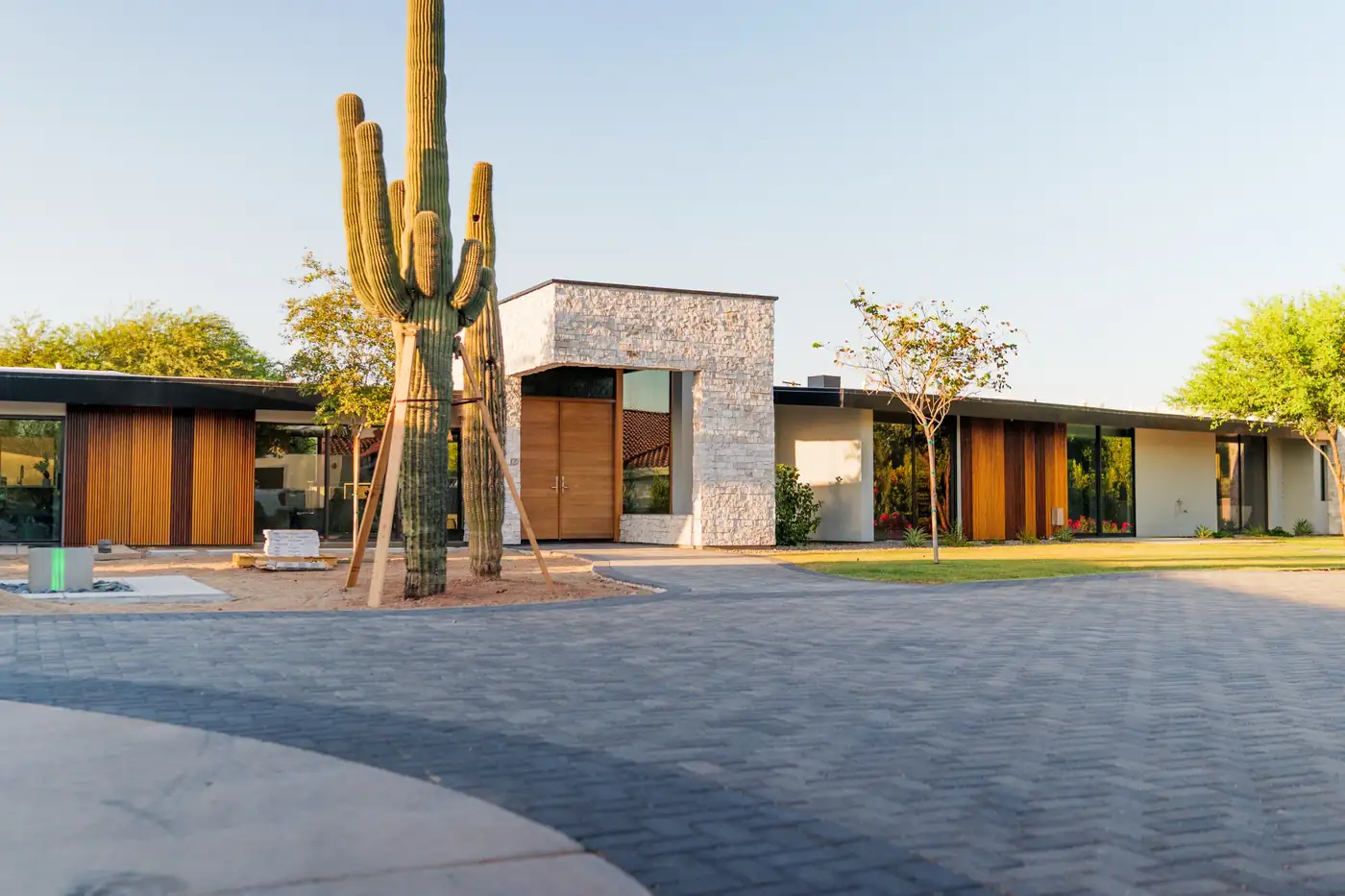
We lean on plants that shrug off full sun and go weeks between deep waterings once established. Group them by thirst so the timer is not overwatering the tough performers just to keep the delicate ones alive. For ground cover, decomposed granite and gravel beat lawn on water and upkeep, and boulders and dry creek beds add structure without a drop. The table below shows starting points we specify often around the Valley. Final selections always depend on your exposure, soil and taste, which we confirm during an on-site walk.
| Plant or material | Type | Water need | Best use |
|---|---|---|---|
| Desert marigold | Flowering perennial | Very low | Color accents, borders |
| Red yucca | Accent succulent | Very low | Focal points, full sun |
| Agave and barrel cactus | Sculptural succulent | Very low | Statement pieces, gravel beds |
| Texas sage (Leucophyllum) | Shrub | Low | Screening, foundation plantings |
| Desert spoon | Architectural accent | Very low | Modern desert layouts |
| Decomposed granite | Ground material | None | Pathways, plant beds, turf replacement |
| Boulders and rip rap | Ground material | None | Dry creek beds, grade and drainage |
How do you replace a thirsty lawn without a gravel wasteland?
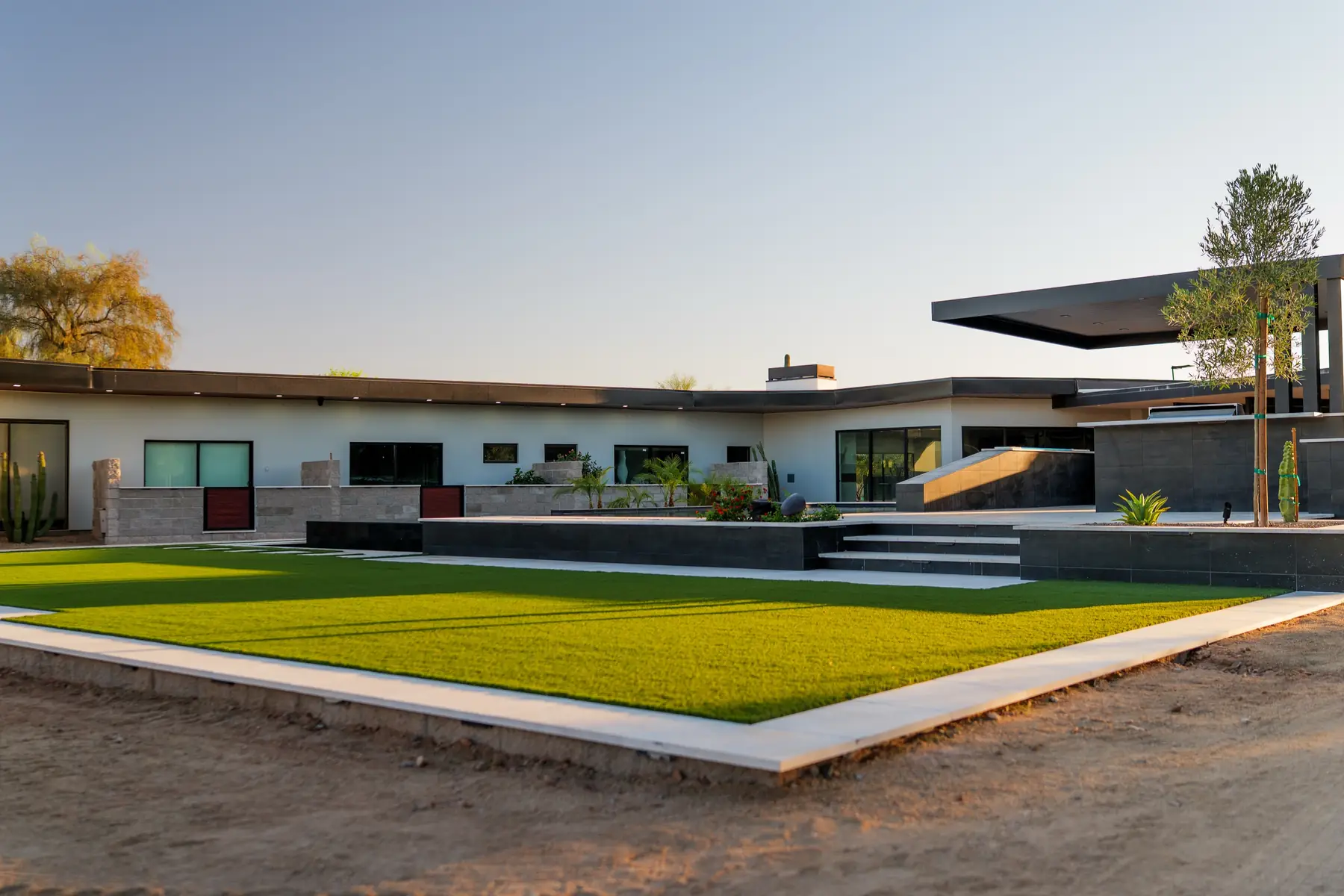
The fear with xeriscaping is trading a green lawn for a gravel parking lot. The fix is layering. Keep a small, genuinely used turf zone if you want one, ideally low-water or artificial turf, then break up the rest with planting beds, boulders, a dry creek bed that also carries monsoon runoff, and hardscape you actually stand on. A flagstone or paver seating area, a decomposed-granite path that curves, and a few specimen agaves give the eye somewhere to land. Vary gravel size and color, mound the grade, and cluster plants in odd-numbered groups so it looks composed, not scattered.
Do Arizona cities offer water rebates for xeriscaping?
Yes, and it is worth checking before you design. Several Valley cities and water providers run programs that reward removing thirsty grass or upgrading to efficient irrigation, and some offer grass-removal or smart-controller incentives. The catch: eligibility, amounts and rules change year to year and vary by city, so we never quote a rebate figure. Start at your own city or water provider website, look for landscape or grass-removal rebate programs, and confirm current terms before you tear anything out. Many require pre-approval and a minimum area, so applying first protects the payout. We are happy to design to whatever your program requires.
How do hardscape and irrigation tie a xeriscape together?
A xeriscape lives or dies on two things underground: irrigation and grading. Drip irrigation on a timer delivers water straight to each plant's roots with almost no evaporation, and zoning it by plant thirst is what makes the whole design efficient. Grading and permeable hardscape decide where monsoon water goes, ideally into your planting beds instead of the street. Our crews also deal with caliche, the hard calcium layer under a lot of Phoenix yards, which has to be broken through so plants and footings can drain. When the planting, drip lines and permeable paver zones are planned together, the yard looks better and costs less to run.