Last updated September 25, 2026
We have built retaining walls across Phoenix, Scottsdale, and the East Valley since 2012, and cost is the first thing homeowners ask about. The honest answer is that a retaining wall is priced by its face area and by how hard it has to work. Below is what we generally see per square face foot by wall type, and the site factors that move your number up or down.
How much does a retaining wall cost per square foot in Arizona?
Retaining walls in Arizona are almost always quoted per square face foot, which is the height of the wall multiplied by its length. A wall 3 feet tall and 30 feet long is 90 square face feet. For a standard dry-stack segmental block wall, we generally see about 25 to 40 dollars per square face foot installed. Poured concrete or mortared block runs higher, and decorative stone or veneer walls higher still. These are typical Phoenix-area ranges for planning only. Your real number depends on wall height, soil, drainage, and access, which is why we quote from an on-site estimate rather than a flat rate.
| Wall type | Typical cost per square face foot | Notes |
|---|---|---|
| Segmental block (dry-stack SRW) | 25 to 40 dollars | Interlocking concrete block, most common for yards |
| Poured concrete or mortared block | 35 to 60 dollars | Structural, often stuccoed or capped |
| Decorative or stone-veneer | 45 to 90 dollars | Natural stone or veneer over block, premium look |
| Seat and planter walls (low) | 40 to 80 dollars | Low walls with caps that double as seating |
What drives the cost of a retaining wall in Phoenix?
Four things move the price more than anything else. Height comes first: walls over about 3 to 4 feet usually need engineering, a city permit, and internal reinforcement like geogrid, which adds cost fast. Drainage is not optional here. Our monsoon storms dump water against a wall, so gravel backfill, a drain pipe, and weep holes are built in to keep it from failing. Soil matters too, since Phoenix caliche is rock-hard and can slow excavation and footing work. Finally, access and slope: a steep lot or a backyard a machine cannot reach means more hand labor. We price all of this during the walkthrough, not from a phone quote.
| Cost driver | Effect on price | Why in Arizona |
|---|---|---|
| Wall height over 3 to 4 feet | Higher | Triggers engineering, permit, and reinforcement |
| Drainage system | Built in | Monsoon runoff must be channeled away from the wall |
| Caliche or rocky soil | Higher | Hard digging slows excavation and footings |
| Tight access or steep slope | Higher | More hand labor when machines cannot reach |
Do I need a permit or engineering for a retaining wall in Arizona?
In most Phoenix-area cities, a retaining wall up to about 3 to 4 feet of exposed height, measured from the bottom of the footing, can be built without a permit as long as it is not holding up a surcharge like a driveway or pool deck. Once you go taller, or the wall supports a slope or structure above it, the city typically requires a permit and stamped engineering. Requirements vary by municipality, so Phoenix, Scottsdale, Mesa, and Gilbert each read the code a little differently. As a licensed contractor, ROC 359628, we confirm what your city requires and pull the permit when one is needed, so the wall is legal and built to hold.
Is a retaining wall worth it in an Arizona yard?
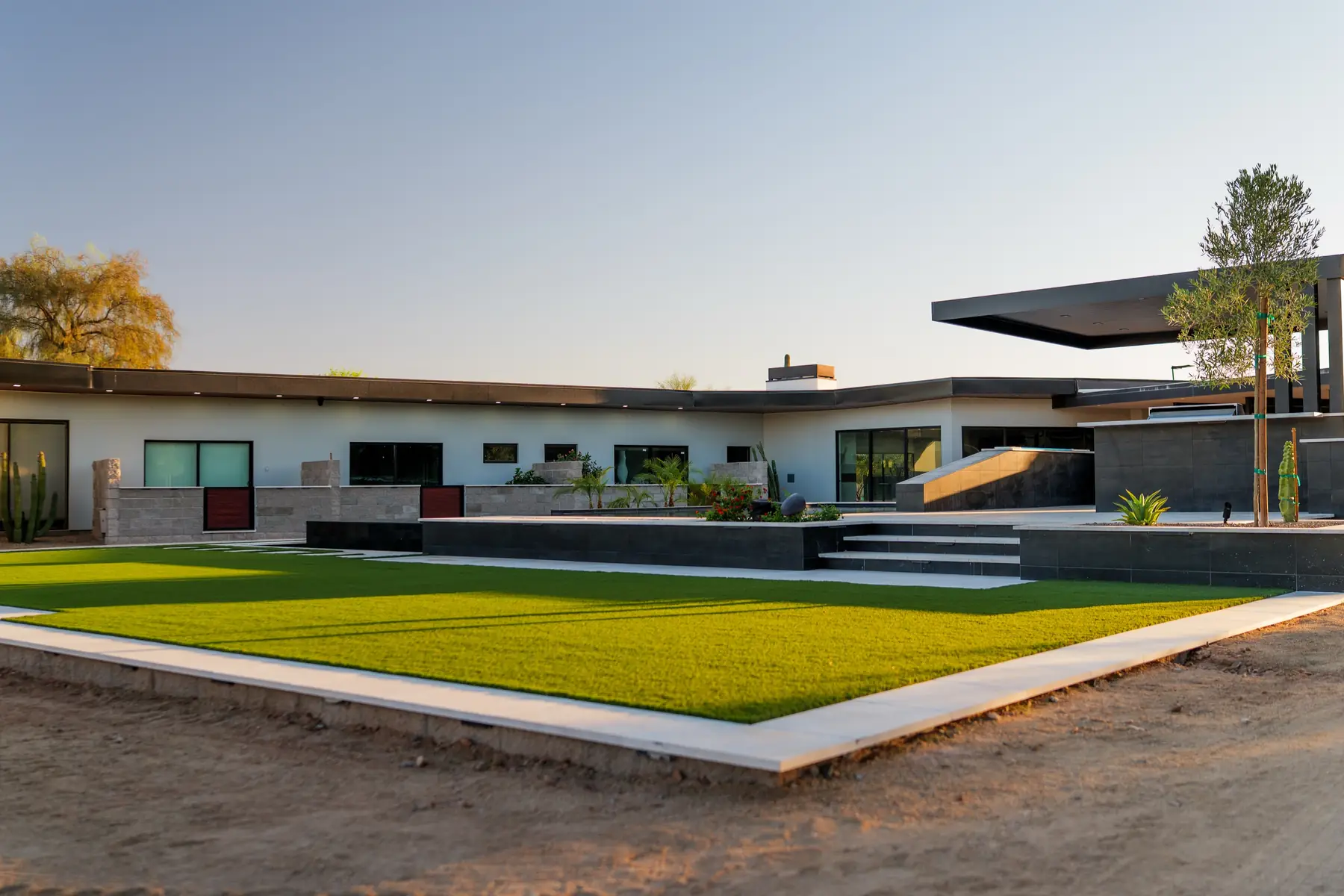
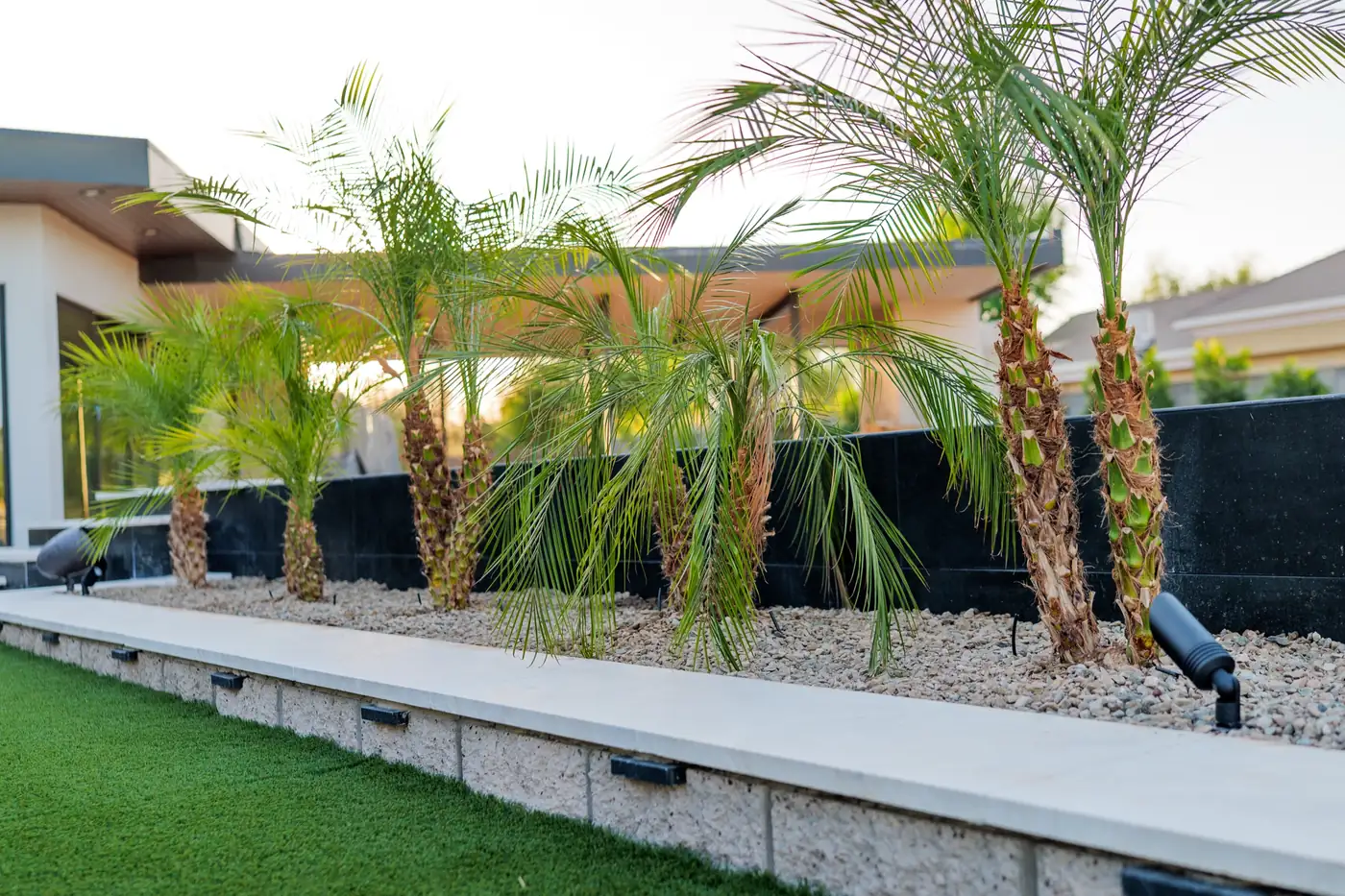
On a sloped desert lot, a retaining wall is often what makes the yard usable. It turns a hillside into flat, planted terraces, creates room for turf, a patio, or a fire feature, and protects your foundation and hardscape from monsoon washout. Many homeowners pair low seat walls and planter walls with xeriscape and desert planting, which keeps water use and upkeep down while adding structure. A well-built, well-drained wall can last for decades in our climate, so the cost is spread across many years of use. During the estimate we will tell you honestly whether a wall is the right fix or whether regrading solves it for less.