Last updated October 16, 2026
We sweep sand into the joints of every paver field we build across the Phoenix Valley, and the sand we choose decides how the surface holds up to desert weather. Monsoon downpours, blowing dust, ants and 115-degree summer heat all work on those joints, and the wrong sand gives out in a season or two. Here is how polymeric and regular joint sand actually compare for an Arizona yard, and when each one makes sense.
What is the difference between polymeric sand and regular sand?
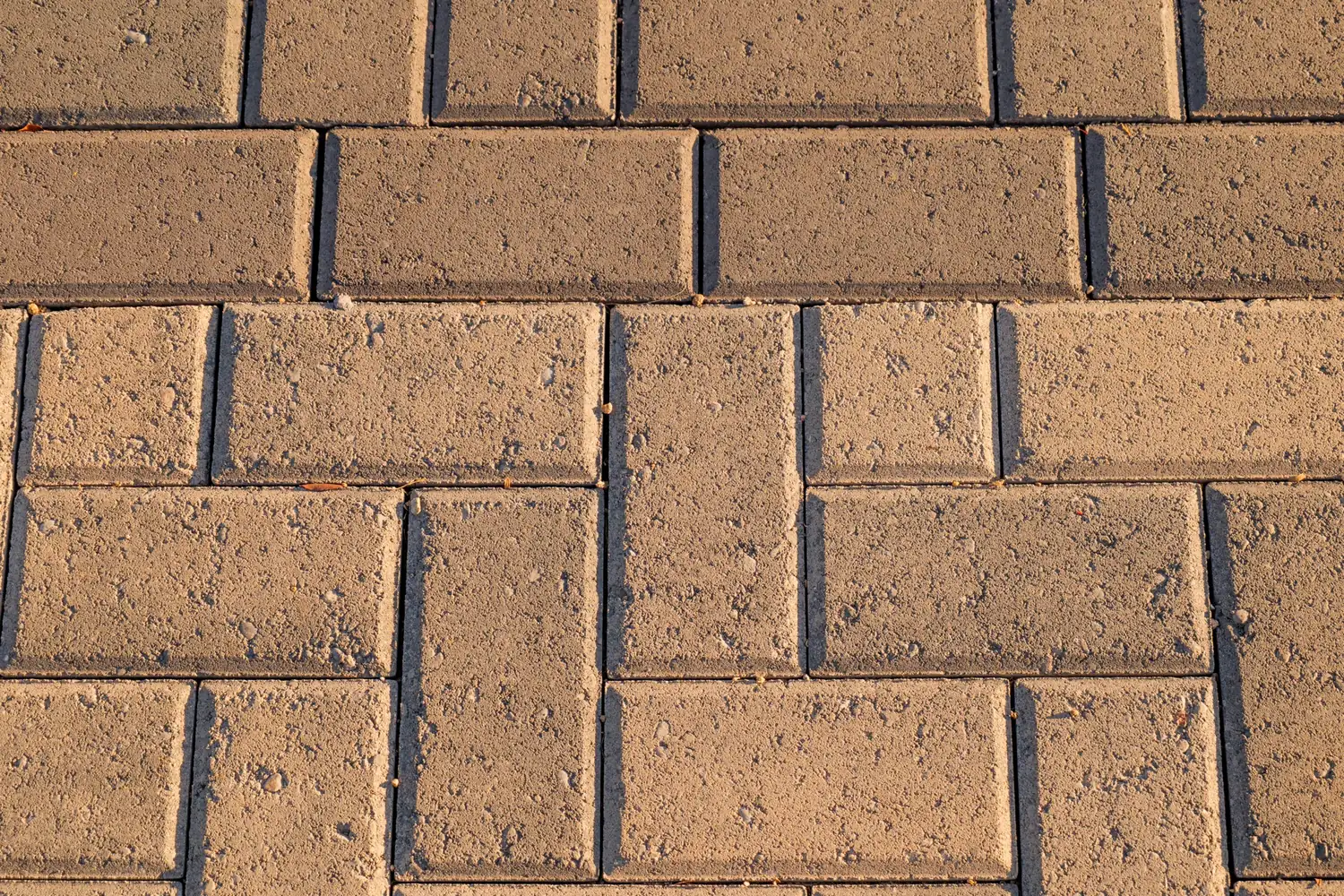
Regular joint sand, sometimes called mason or play sand, is a loose, fine sand swept into the gaps between pavers to hold them in position. It works, but it stays loose forever, so it blows away in dust storms, washes out in rain, and leaves open joints that weeds and ants move straight into. Polymeric sand is the same kind of sand blended with binders that activate when you mist it with water. Once it cures it sets into a firm, slightly flexible joint that locks the paver field together. For a Phoenix install where monsoon runoff and blowing dust hit the joints hard, that cured joint is the difference between a surface that stays tight and one that needs attention every year.
Which lasts longer in Arizona, polymeric or regular joint sand?
In the desert, polymeric sand lasts far longer in the joints than regular sand. Our monsoon season sends sheeting water and wind across a patio, and loose sand simply migrates out, leaving low joints that collect debris and seeds. Polymeric sand resists that washout because the cured binder holds the grains together, so a properly installed field can keep its joints for years with only occasional touch-ups. Regular sand often needs topping up after one or two seasons. The table below compares the two on the factors that matter most in Phoenix. Treat the cost figures as directional planning numbers, not a quote, since material prices and the size of your field drive the real total.
| Factor | Regular (mason) sand | Polymeric sand |
|---|---|---|
| Upfront cost | Lower, a few dollars per bag | Higher, roughly 2 to 3 times plain sand |
| Weed & ant resistance | Poor, joints stay loose and open | Strong, hardened joints resist both |
| Monsoon washout | Washes out in heavy storms | Stays locked through downpours |
| Longevity before re-sanding | Often 1 to 2 seasons | Years, with occasional touch-ups |
Does polymeric sand stop weeds and ants in paver joints?
Mostly, yes, and this is the main reason we default to it. A loose regular-sand joint is an open invitation: wind-blown seeds settle in, germinate after a monsoon, and ants tunnel through to build nests under the pavers, pushing sand up into little mounds. A cured polymeric joint is firm and closes off that pathway, so weeds and ants have a much harder time taking hold. It is not magic, a seed that lands on surface grit can still sprout, and over many years a joint can open up, but the difference in day-to-day maintenance is large. Most homeowners who switch from plain sand to polymeric notice they are pulling far fewer weeds out of the patio.
When should you use regular sand instead of polymeric?
There are a few cases where regular sand still makes sense. Permeable paver systems designed to drain water through the joints usually call for a specific open-graded aggregate, not polymeric sand, so the surface keeps draining. Very wide joints or certain flagstone looks sometimes use a different jointing product. And on a tight budget for a low-traffic, shaded path, plain sand can be acceptable if you accept more upkeep. For pool decks we still recommend polymeric sand around the coping, and to be clear, Solterra builds the hardscape and deck around your existing pool, we do not build or install the pool itself. For the large majority of Phoenix patios, driveways and walkways, polymeric sand is the right call.