Last updated September 25, 2026
We have designed and built backyards across Phoenix, Scottsdale and the East Valley since 2012, and the desert rewards planning. A yard that ignores caliche soil, monsoon runoff and afternoon sun looks great in photos and fails by August. This is the process we walk every homeowner through: assess the site, zone the space, choose materials that handle heat, then layer in shade and water. Here is how it goes.
How do you start designing an Arizona backyard?
Every good desert design starts on site, not on paper. Before drawing anything, we spend time watching how the yard behaves: where the sun lands morning versus late afternoon, how water sheets during a monsoon storm, and where caliche or hardpan sits under the surface. We also check HOA rules and setbacks early, because they shape what you can build and plant. Only once we understand sun, slope, soil and drainage do we start zoning. Skipping this step is why so many Phoenix yards end up with a patio that bakes at 5 p.m. or a low corner that floods every July.
How should you zone a desert backyard?
Once you know how the site behaves, divide it into zones by how you will actually use it: a dining and entertaining area, a lounge or fire area for cooler evenings, a green or play space, and softer planted buffers. In Arizona the sun path decides placement more than anything. We locate seating where a ramada, pergola or the house throws afternoon shade, keep water-hungry lawn small or swap it for turf, and use planted zones to screen and cool. Grading ties it together, moving monsoon runoff away from the house and toward areas that can absorb it.
| Backyard zone | Typical use | Heat-smart surface or feature | Desert design note |
|---|---|---|---|
| Dining and entertaining | Meals, gatherings | Light pavers under a ramada or pergola | Face away from the west sun and shade the seating |
| Lounge and fire | Evening relaxing | Travertine or pavers with a fire pit | Best in cooler evenings. Keep clear of the house eaves |
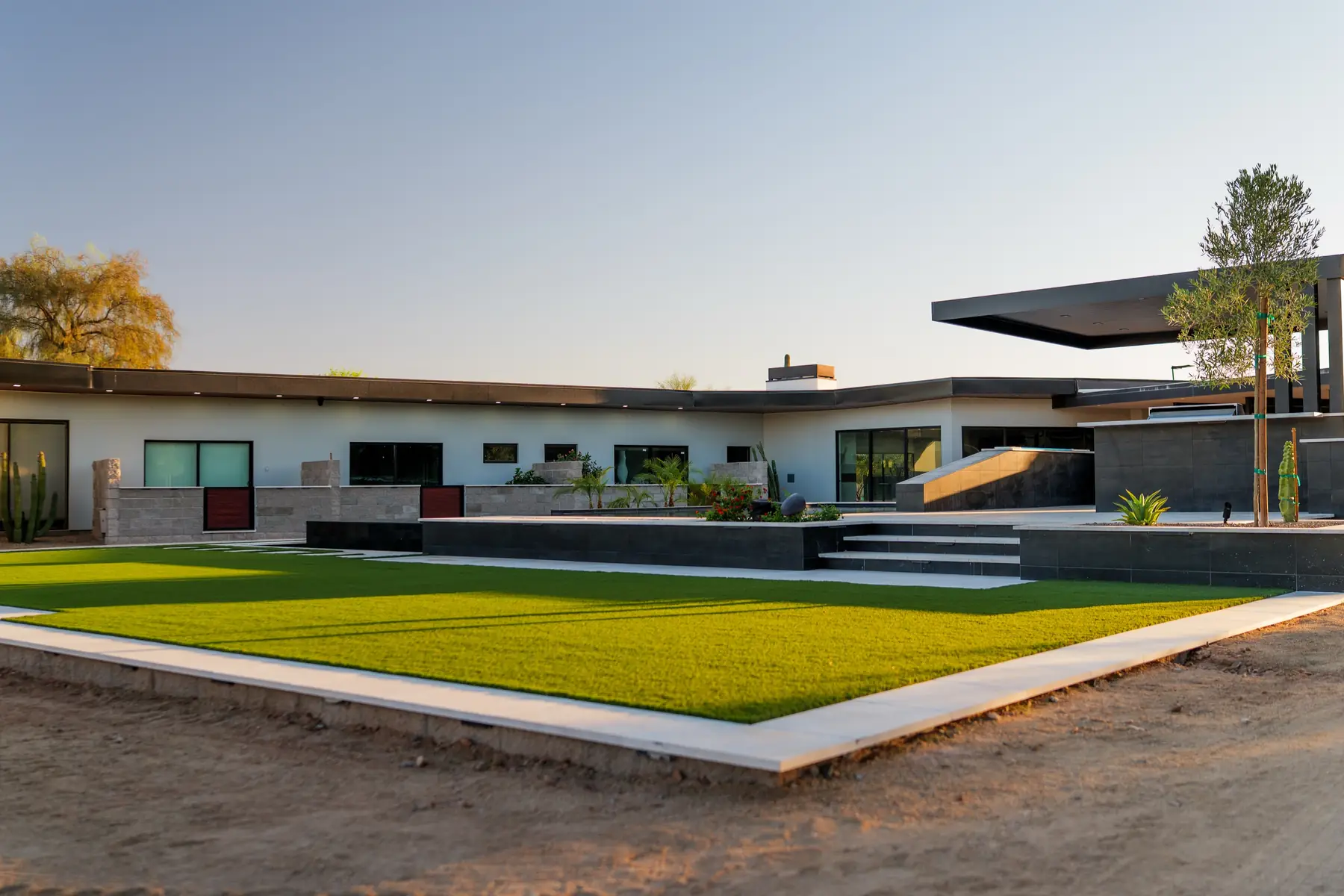
| Green and play space | Kids, pets, putting | Artificial turf | Low water use and drains fast after monsoon rain |
| Planted buffer | Screening and softening | Desert-adapted plants with gravel | Xeriscape cuts water. Check city rebates |
| Paths and transitions | Moving between zones | Light pavers or decomposed granite | Grade to carry runoff away from the house |
Which materials hold up to Arizona heat and sun?
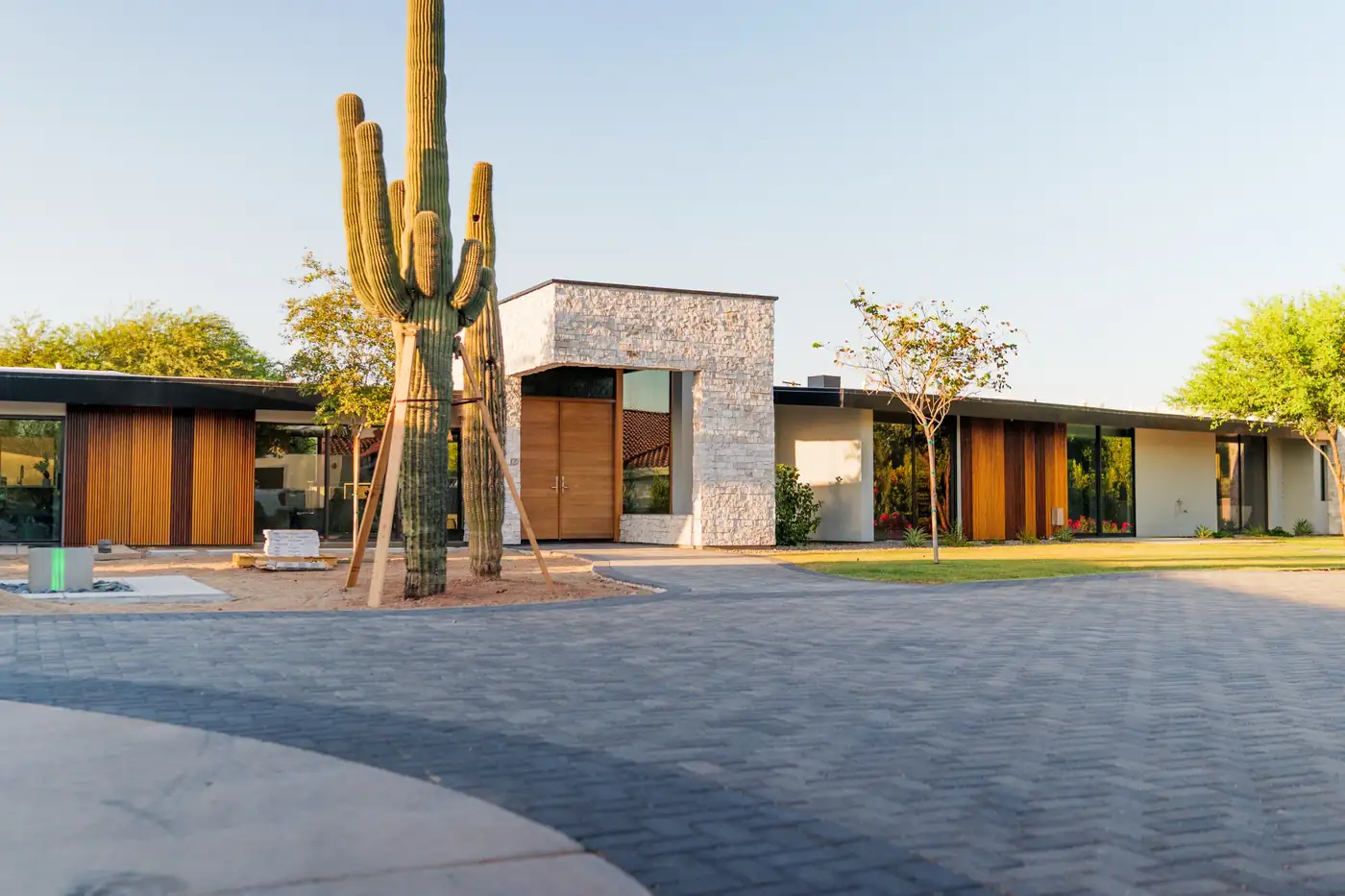
Material choice is where desert design gets practical. For surfaces you walk barefoot, lighter tones stay cooler than dark ones because they reflect more sun, so we lean toward light travertine and light-toned pavers for patios and pool decks around an existing pool. Artificial turf gives a year-round green space without the water bill and drains quickly after a storm. Under full sun, engineered shade like a ramada or pergola does more for comfort than any single material. We also choose materials rated for UV and heat so colors hold and joints stay stable through years of Phoenix summers, not just the first season.
How do you plan for shade and water in a Phoenix backyard?
Shade and water are what make a desert yard livable, so we design them in, not on. For shade we layer options: a ramada or pergola over the main seating, shade trees placed to block the western sun, and shade sails for flexible coverage. For water, xeriscape planting and drip irrigation keep things green on a fraction of a lawn's usage, and many Valley cities offer turf-replacement or water rebates worth checking before you plant. Efficient irrigation zones by plant type so nothing is over-watered. Done right, you get a backyard that stays comfortable and low-maintenance from April through the worst of summer.