Last updated September 25, 2026
Solterra has designed and built desert yards across the Phoenix metro since 2012, and the projects that age best all start from the same place: work with the desert, not against it. Good desert landscaping is not a bare gravel lot. It layers plants, stone, hardscape and light so the space feels lived-in and low-maintenance. Here are the ideas we come back to, plus the plants that actually thrive in full Valley sun.
What are the best low-water desert landscaping ideas for a Phoenix yard?
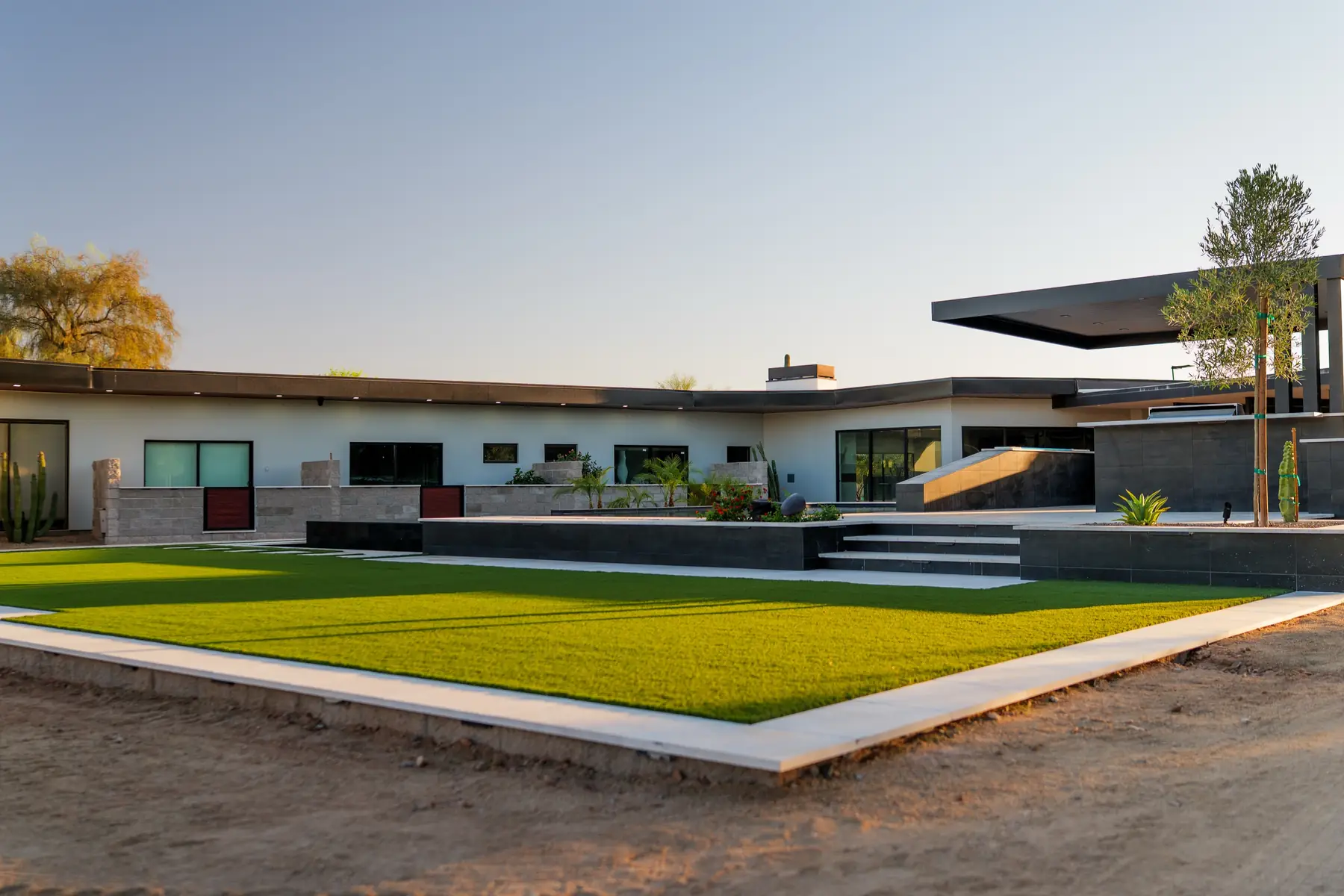
Start with structure, then soften it. We lay out the hardscape first: a paver or travertine patio for gathering, a seating wall or built-in bench, and decomposed granite paths that tie the zones together. Boulders set in odd-numbered groupings give the yard weight and read as natural desert. From there we layer desert-adapted plants in drifts rather than dotting them evenly, so beds look designed instead of scattered. A dry riverbed of rip-rap and cobble handles monsoon runoff and doubles as a focal point. Finish with a small artificial turf pad for kids or pets and low-voltage uplighting on a signature agave or barrel cactus. The result is xeriscape that still feels like a room.
Which desert plants actually thrive in full Phoenix sun?
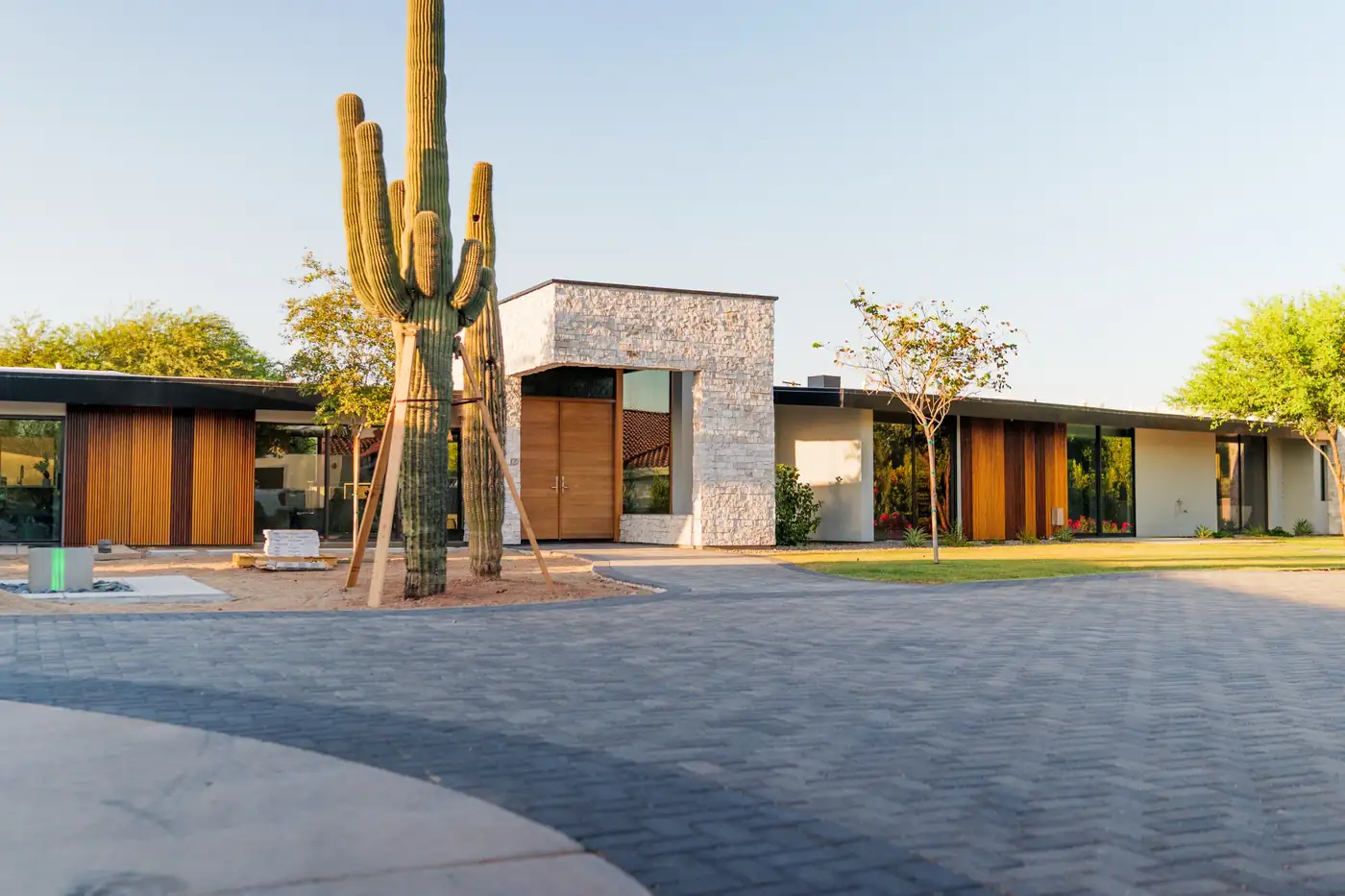
For full-sun Valley yards we lean on desert-adapted and Arizona-native plants that handle 115-degree afternoons and the reflected heat off block walls. A reliable palette mixes evergreen structure, seasonal color and sculptural accents: red bird of paradise and Texas sage for flower, agave and golden barrel for form, and desert spoon or ocotillo for height. Groundcovers like trailing lantana and damianita knit beds together and cut the amount of exposed gravel. Almost all of these run on drip irrigation and need far less water than turf or a traditional lawn, which keeps them HOA-friendly and eligible for local water-rebate programs in many Valley cities. The table below is our go-to starting list.
| Plant | Water need | Notes |
|---|---|---|
| Red bird of paradise | Low | Heat-loving shrub, orange-red bloom all summer, dies back in hard frost |
| Texas sage (cenizo) | Very low | Silvery evergreen, purple bloom after monsoon rain, great privacy screen |
| Golden barrel cactus | Very low | Sculptural accent, full sun, needs sharp drainage broken through caliche |
| Agave (various) | Very low | Bold form, almost no upkeep, keep spiny types back from paths |
| Desert spoon (sotol) | Very low | Fountain of blue-green blades, gives height without a big footprint |
| Ocotillo | Very low | Tall living-fence accent, leafs out after rain, dramatic red flower tips |
| Trailing lantana | Low | Fast groundcover, long bloom, fills beds and cuts gravel glare |
| Desert marigold | Very low | Arizona native, yellow bloom much of the year, reseeds itself |
| Red yucca | Very low | Grassy clumps, coral spikes, hummingbird magnet, very tough |
How do you design around caliche, monsoon and HOA rules?
Three desert realities shape every plan. Caliche, the cement-hard calcium layer under much of the Valley, blocks drainage and traps water around roots. We break through it and build planting pockets with the right backfill so cactus and agave do not sit wet and rot. Monsoon storms can dump inches of rain in an hour, so we grade the yard to move water away from the house and use dry riverbeds and permeable gravel to slow it down. And most Valley neighborhoods have an HOA with an approved plant list and gravel-versus-turf rules, so we design to those from the start. Getting drainage, soil and approvals right on paper is what keeps a desert yard alive past its first summer.
What does a desert landscaping project typically cost in Phoenix?
Honest answer: desert landscaping cost depends entirely on your yard, so treat any number as a starting range and get an on-site estimate. What we generally see across Phoenix projects is that a simple gravel-and-plant refresh sits at the low end, while a full design-to-build yard with patio, walls, lighting and irrigation runs much higher. Square footage, caliche depth, how much hardscape you want and plant sizes all move the number. The ranges below are typical for the Valley, not quotes. We walk the property, check grades and soil, and price the actual scope so there are no surprises. Phased builds are common when a full yard is not in this year's budget.
| Scope | What it includes | Typical Phoenix range |
|---|---|---|
| Gravel and plant refresh | Decomposed granite, drip irrigation, desert plants | 6 to 12 dollars per square foot |
| Mid-range desert yard | Above plus a paver patio and gravel paths | 15 to 30 dollars per square foot |
| Full design-to-build | Patio, seating walls, lighting, irrigation and planting | 30 to 60 dollars per square foot |