Last updated September 25, 2026
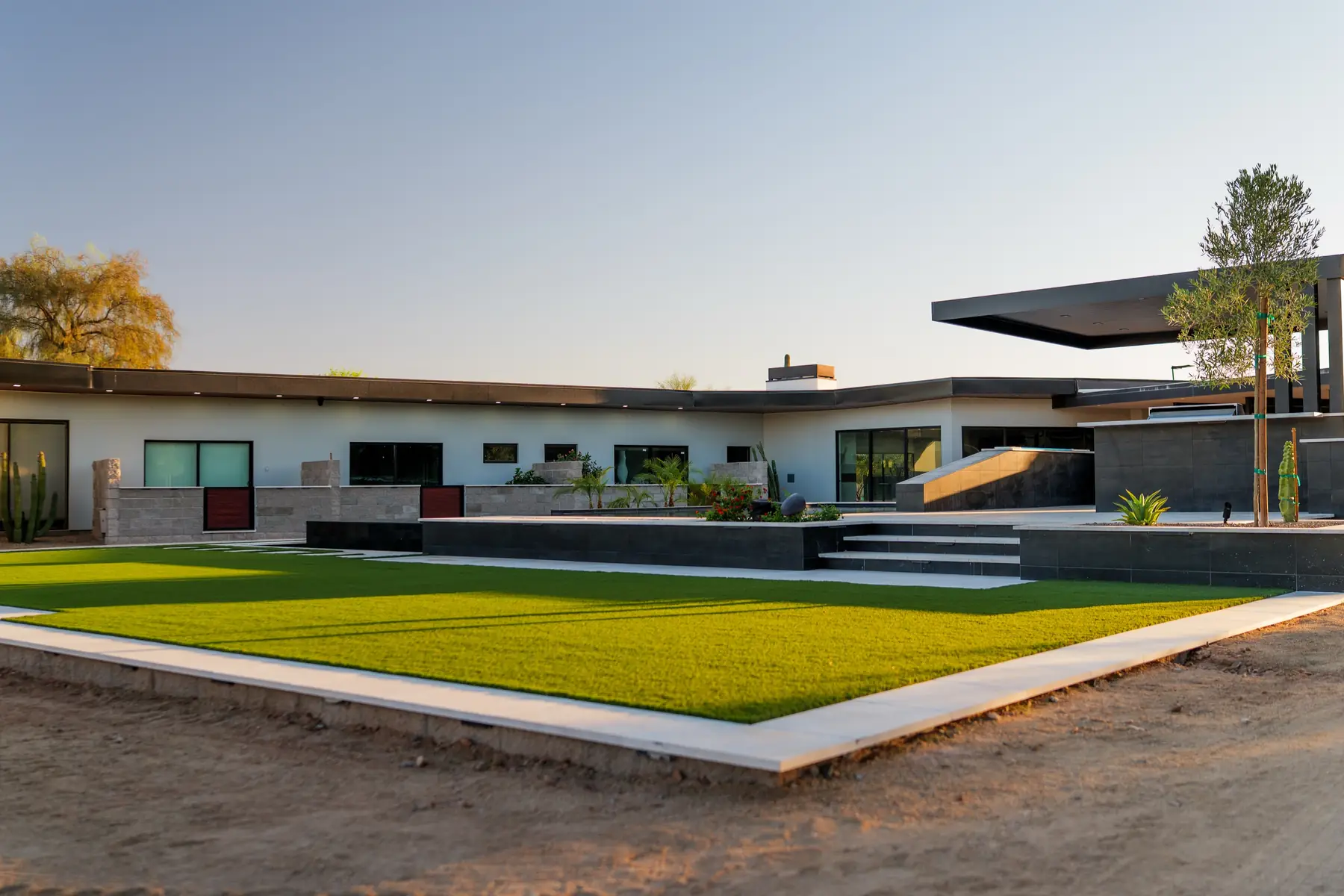
We have installed artificial turf across Phoenix, Scottsdale, Mesa and Gilbert since 2012, and the desert is hard on a cheap lawn. Full sun fades weak yarn, monsoon storms flood poor drainage, and caliche soil ruins a lazy base. The good news is that turf built and installed for Arizona lasts for years. Here is what we look for, and how the common turf types compare by use.
What should you look for in artificial turf for Arizona?
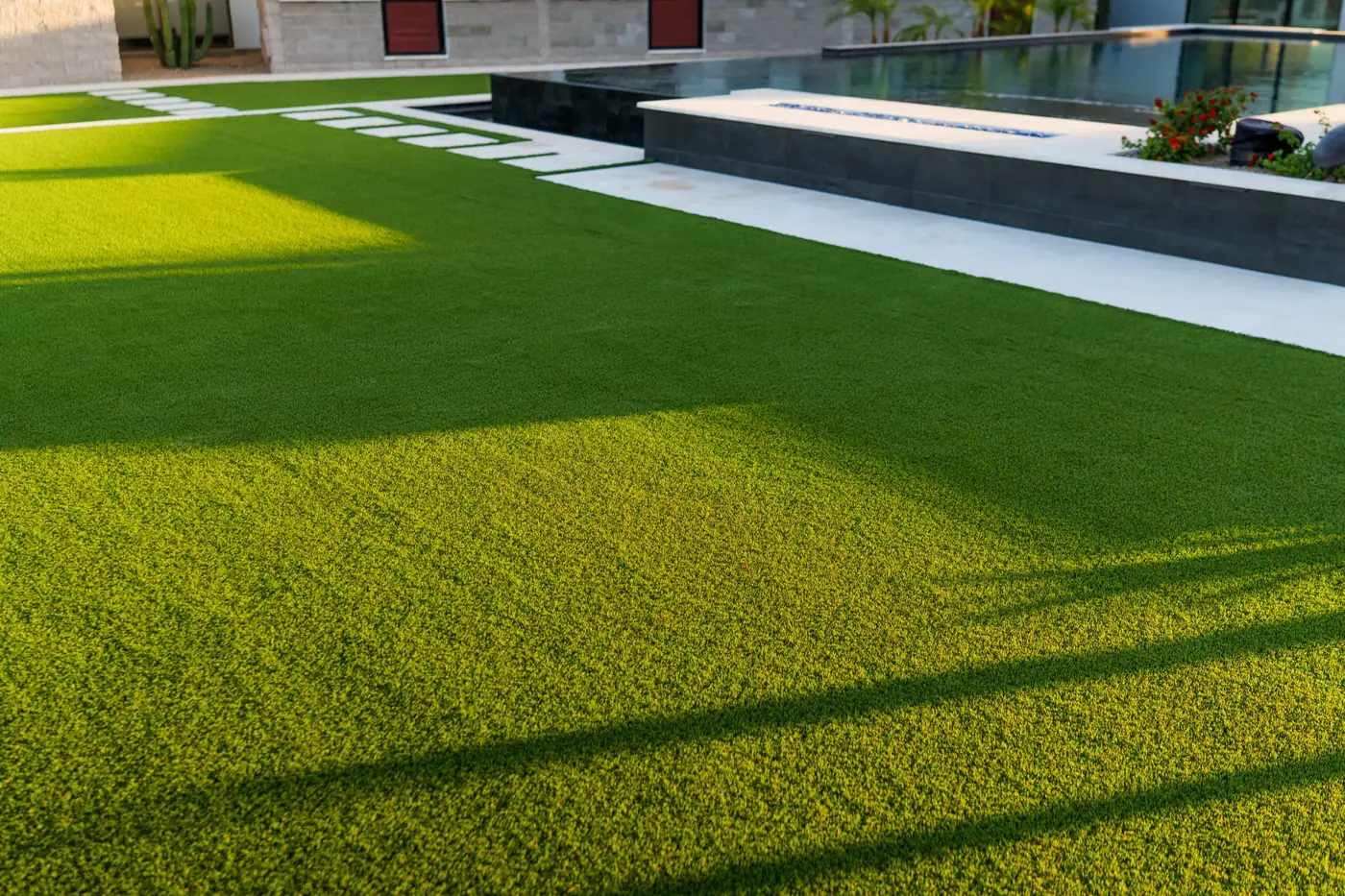
Four specs matter most in the desert. UV stability comes first: the yarn should be UV-stabilized polyethylene so full sun does not fade it or make it brittle in a few seasons. Face weight, measured in ounces per square yard, tells you how much yarn is packed in. For a lawn that shrugs off foot traffic we generally look for heavier face weights, often in the range of 60 to 90 ounces, rather than thin builder-grade rolls. Infill matters for cooling, drainage and keeping blades upright, with anti-microbial options for pets. Finally the backing should be fully perforated for drainage and rated for high heat so it does not delaminate. Get all four right and the lawn holds up.
Which artificial turf is best for each use in Arizona?
There is no single best turf, only the best turf for how you will use the space. A family lawn wants a durable mid to tall pile that still looks natural. Dogs need a shorter, dense pile with a free-draining backing and anti-microbial infill so cleanup is easy. Kids play areas pair a softer blade with a shock pad. Putting greens use a short, stiff nylon pile rolled tight for a true putt. And turf set beside a pool deck or patio should be a light, heat-smart blade you can walk on barefoot. The table below sums it up.
| Use case | Recommended pile height | Priority spec | Notes for Arizona |
|---|---|---|---|
| Family lawn | 1.5 to 2 inches | High face weight | Durable, natural look in full sun |
| Dogs and pets | 1 to 1.5 inches | Free-draining backing | Anti-microbial infill, easy rinse |
| Kids play area | 1.25 to 1.75 inches | Soft blade plus shock pad | Cushioned, cooler underfoot |
| Putting green | 0.5 to 1 inch | Short stiff nylon | True roll, holds up to full sun |
| Pool deck and patio surround | 1.25 to 1.75 inches | Light, heat-smart blade | Comfortable barefoot near the deck |
| Low-traffic accent | 1.5 to 2 inches | Value face weight | Fills xeriscape gaps, low upkeep |
Does artificial turf get too hot in the Arizona sun?
Honest answer: turf blades warm up in full Phoenix sun and will feel hotter than shaded natural grass, so this is worth planning for. Heat is directional and driven by color and exposure, not a magic number. Lighter blade colors and heat-reflective, or so-called cool, yarns run cooler than a dark green shag. Infill choice helps too: certain ceramic-coated and cooling infills hold less heat than plain crumb rubber. Shade is the biggest lever, so a pergola, tree or shade sail over the area you actually sit in makes the surface far more usable in July. And a quick hose-down cools any turf for a while. We plan layout and shade during the estimate.
How does artificial turf handle Phoenix monsoons and caliche soil?
This is where installation beats product. Phoenix sits on caliche, a hard cemented layer that traps water, so a proper base is everything. We excavate, then build and compact an aggregate base that drains and stays flat instead of rutting. The turf backing should be fully perforated, and on tight caliche we add drainage so monsoon downpours move through instead of pooling. Edges get nailed or anchored so summer heat expansion does not lift them, and seams are glued, not just stapled. Skip any of this and a beautiful roll of turf will pond water, wrinkle and pull loose in the first big storm. The base is what makes it last.
How much does artificial turf cost in Phoenix, and are there water rebates?
Cost depends on the turf grade, the square footage, and how much base work your yard needs, so a real number always comes from an on-site estimate. That said, what we generally see for quality installed landscape turf in the Phoenix area falls in the range of 8 to 15 dollars per square foot, with premium turf, putting greens, or small and complex areas running higher. Removing old grass, hauling caliche, and extra drainage add to it. On the savings side, many Valley cities and water providers offer grass-removal or landscape-conversion rebates, and those programs and amounts change often, so check your city's current program. We can walk the yard and give you a firm number.